
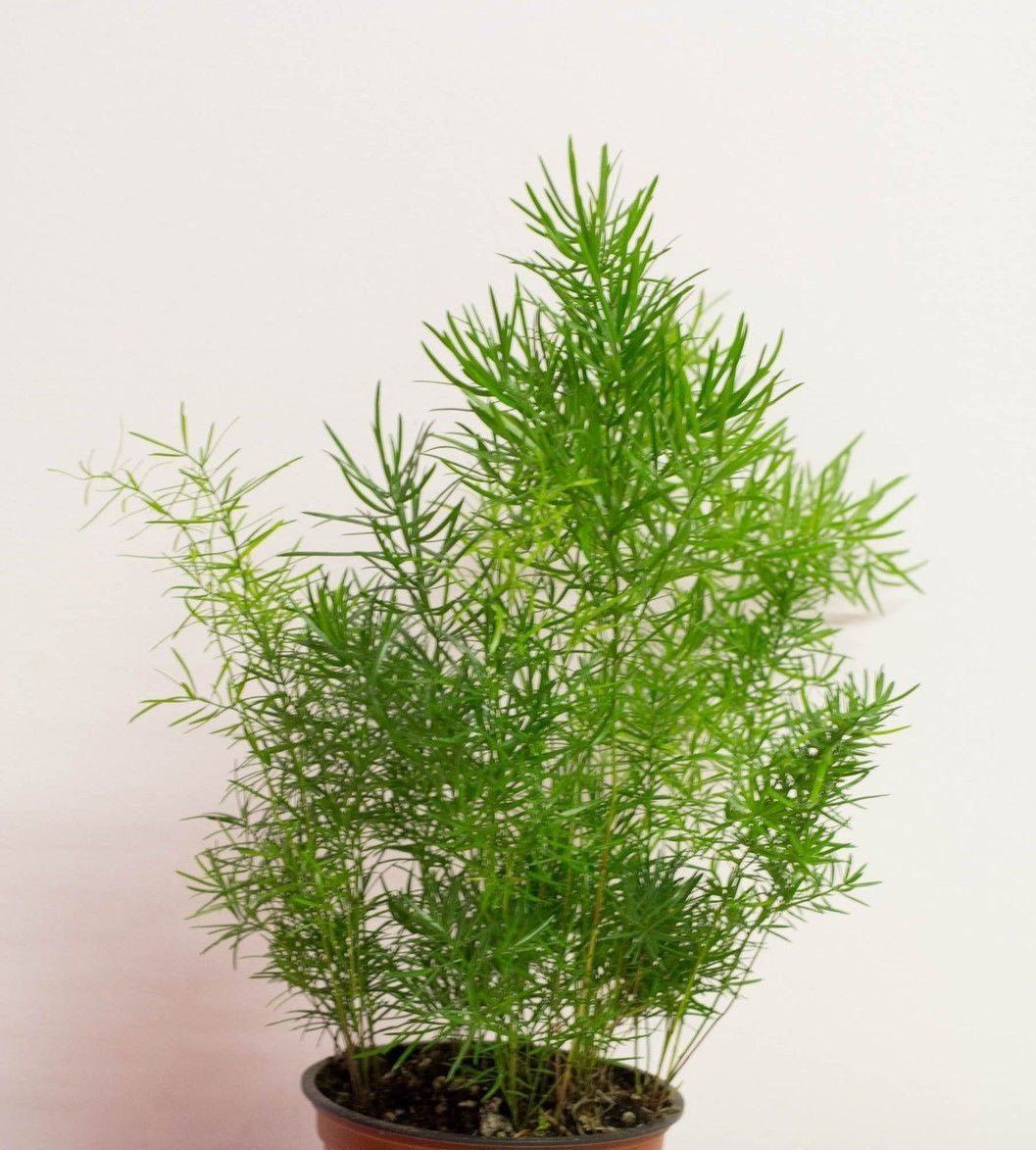
Key Features & Benefits of Asparagus Fern
Lush, Feathery Foliage: Asparagus Fern have soft, green, lace-like leaves (technically cladodes) create a dense, bushy appearance — perfect for adding texture and natural greenery to interiors or balconies.
Versatile Decoration: Suitable for indoors (living rooms, balconies, offices) or in shaded outdoor areas. Works well in containers, hanging baskets, or as a trailing plant.
Air-Purifying & Ambience Enhancing: Adds a calming, natural element to spaces and can improve indoor air quality when kept as a houseplant.
Low-Maintenance & Beginner Friendly: Requires moderate care — does well without frequent attention, yet responds well to proper watering, light, and humidity.
Care Instructions
| Requirement | Details |
|---|---|
| Light | Bright, indirect light or partial shade. Avoid harsh, direct midday sunlight to prevent scorching. |
| Watering | Keep the soil slightly moist for Asparagus Fern. Water when the top 1–2 inches of soil feel dry. In summer, water more frequently; reduce during winter. Ensure good drainage — avoid letting roots sit in water. |
| Soil & Potting | Use well-draining potting mix rich in organic matter (peat-based or loamy soil works well). Repot every 1–2 years or when root-bound. |
| Humidity & Temperature | Prefers moderate to high humidity (ideal ~50–70%). Thrives at warm indoor temperatures (~15–24°C). Mist leaves occasionally or place on pebble tray in dry climates. |
| Fertilizer | During spring and summer, feed with a balanced liquid fertilizer (diluted to half strength) every 3–4 weeks. Skip or reduce fertilizing in winter. |
| Maintenance | Remove yellow or dry fronds to keep the plant healthy and tidy. Wear gloves if needed — mature stems may have fine thorns. |
Safety & Precautions
The plant (especially berries if produced) is toxic if ingested — keep away from pets and children.
Some people may get mild skin irritation from contact with the stems — gloves recommended when pruning or handling older plants.
Ideal Use Cases
Balcony or patio decoration (in shaded or semi-shaded areas)
Indoor houseplant — living rooms, hallways, bathrooms (with adequate light & humidity)
Hanging baskets or wall-mounted planters to create cascading greenery
Office spaces — for a low-maintenance yet attractive plant that softens interiors
Sridharan –
not growing